Roof Systems
Spray Polyurethane Foam Roofing in Asheville, NC
Spray polyurethane foam roofing for Asheville's mountain-sited buildings, covering complex rooflines, R-value, recoat maintenance, and application windows.
SPF Roofing for Complex Rooflines on Asheville's Mountain-Sited Buildings
Spray polyurethane foam earns its place on Asheville roofs with genuinely complicated geometry, mountain-sited buildings with multiple roof planes, tucked-in mechanical wells, and transitions that a sheet membrane would need a dozen field seams to cover.
Complex Rooflines on Mountain-Sited Institutional Buildings
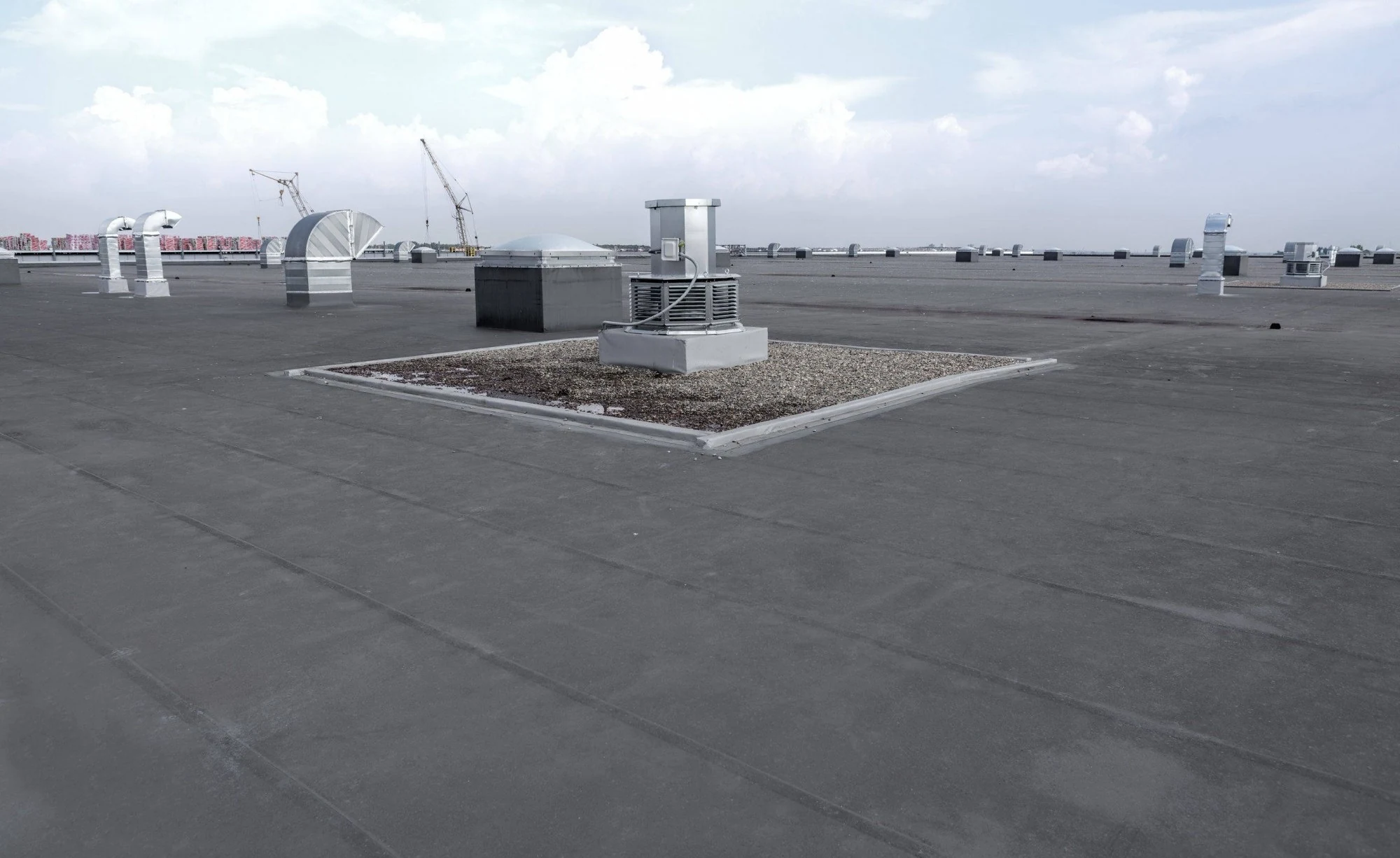
Buildings sited on sloped lots near the Blue Ridge Parkway corridor or on hillside institutional campuses around Asheville often carry genuinely complicated rooflines, multiple low-slope sections at different elevations, dormers, tucked-in mechanical wells, connected by short, awkward transitions. A sheet membrane covering that geometry needs a field seam at every transition. Spray-applied foam does not.
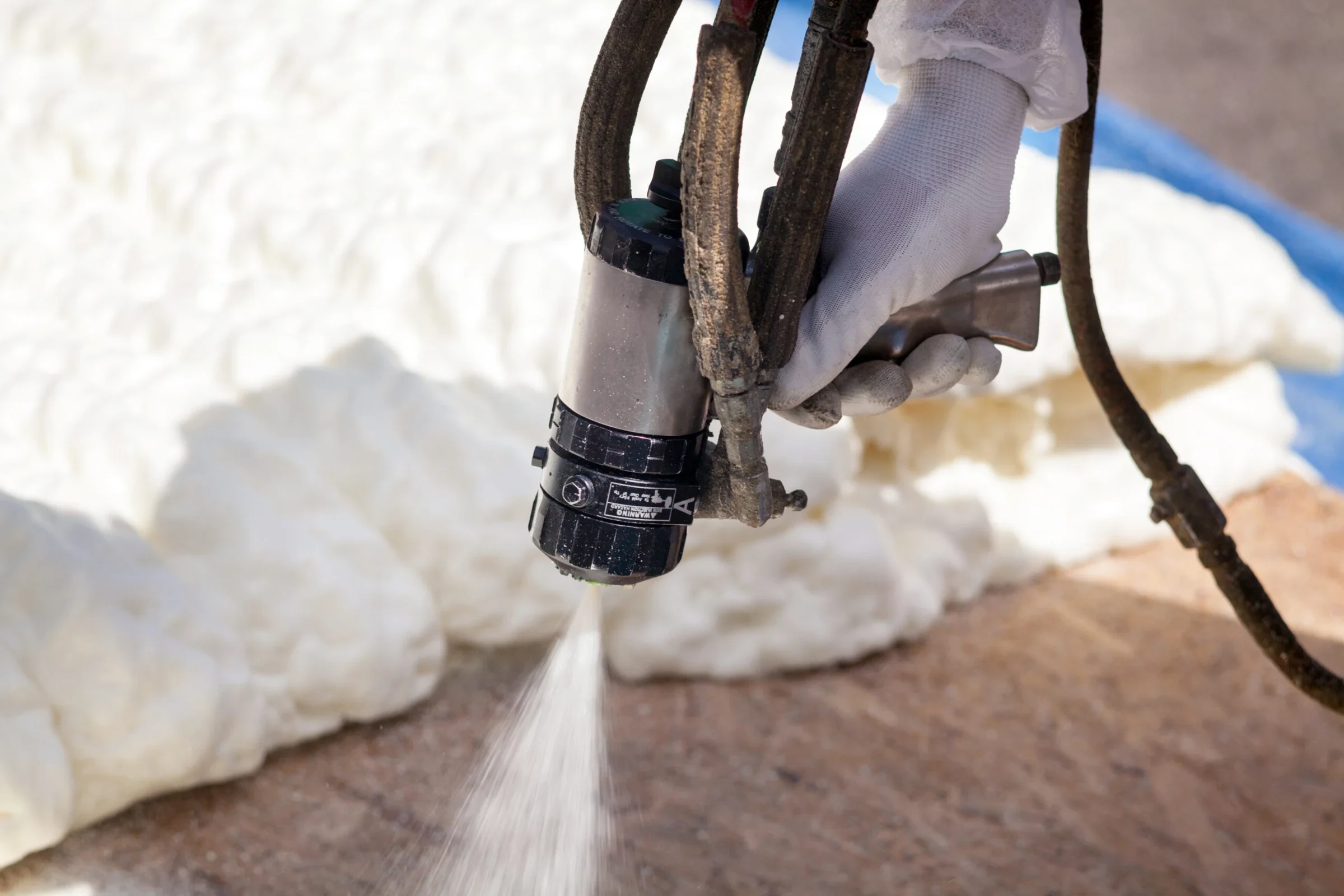
SPF forms its own monolithic insulation-and-membrane layer directly on the roof deck, self-flashing around penetrations and conforming to irregular shapes as it is sprayed. That reduces the number of discrete flashing details a complicated roofline would otherwise require with sheet goods, which is exactly the geometry where SPF earns its premium over a membrane system.
R-Value and Freeze-Thaw Performance Compared to Membrane Systems
SPF provides real insulation value directly within the roof assembly rather than as a separate board beneath a membrane, which matters given Asheville's wide seasonal temperature swing and the freeze-thaw cycling that comes with our elevation. Because the foam self-flashes around penetrations rather than relying on a separate flashing detail, there is less of a thermal bridge and less of a discrete failure point at each roof curb or pipe.
Foam density and tensile strength have to match the roof's actual use. A lightweight, insulation-grade foam has no business on a roof surface that takes foot traffic or hail impact, and specifying the correct roofing-grade density, not a general-purpose foam, is one of the more consequential line items in an SPF submittal.
Monolithic Water-Shedding in a High-Rainfall Region
Asheville's rainfall, funneled and intensified as storms move up the French Broad and Swannanoa river valleys, puts real volume across a roof surface over a wet season. A monolithic foam-and-coating surface sheds that water without the seam count a membrane roof carries across the same complicated geometry, which removes one of the more common failure points on a roof this shape.
An SPF roofing submittal for an Asheville building should include the following before a procurement team compares it against a membrane alternative:
- Foam density and thickness specification appropriate to traffic and hail exposure
- Protective coating type, silicone or acrylic, and its dry film thickness over the foam
- Application temperature and humidity range documented for the installation window
- Manufacturer warranty term specific to the foam-and-coating system as installed
- Recoat maintenance interval and inspection schedule
The Recoat Maintenance Cycle Procurement Teams Should Budget For
Foam itself is not UV-stable, which is why every SPF roof carries a protective coating over the top, and that coating is the part of the system that ages and eventually needs recoating. This is not a one-time installed cost the way a membrane roof reads on a bid tab, it is an ongoing maintenance line that belongs in the building's multi-year capital plan from day one.
We set a recoat interval as part of the original submittal and build it into the facility's maintenance schedule rather than letting SPF get filed away as a maintenance-free system. An owner who budgets for the recoat cycle gets the long service life SPF is known for. An owner who does not tends to be surprised by a coating failure a decade in.
Application Windows and Humidity at Elevation
Spray foam application requires specific temperature, humidity, and dew point conditions to cure properly, and Asheville's mountain fog and frequent humidity swings can narrow the workable application window more than a drier climate would. A crew that pushes an application outside those conditions risks poor cell structure in the foam, which shows up as reduced insulation value and durability later, not on install day.
We build weather contingency directly into the project schedule on an SPF job here rather than treating the application window as guaranteed, and a bid that does not account for weather delay days on an SPF project is quietly underbidding the schedule risk.
Questions Facilities Teams Ask About SPF Roofing
Is SPF appropriate for a simple flat rectangular roof?
It can be, but its real advantage shows up on complicated rooflines with multiple planes and transitions. On a simple flat roof, a membrane system is often the more economical choice, and we say so rather than defaulting to SPF everywhere.
How often does an SPF roof need to be recoated?
It depends on the coating type and UV exposure, and we set the interval as part of the original submittal so it is on the record from day one rather than left as a surprise years later.
Does SPF perform well under Asheville's freeze-thaw cycling?
Yes, when the foam density and coating are specified correctly for roofing use. The monolithic, self-flashing nature of the system reduces the discrete failure points that freeze-thaw cycling tends to work on with a seamed membrane roof.
Can SPF be applied over an existing membrane roof?
Often yes, provided the existing substrate is dry and sound, which we confirm with a moisture scan before recommending it. SPF over a wet or failing substrate just traps the existing problem.
What weather conditions stop an SPF application?
High humidity, dew point conditions close to the application temperature, and active precipitation all stop or delay a spray foam application. We build contingency days into the schedule for exactly this reason rather than assuming the weather window holds.
Related
Ready to review the roof scope?
Request a Roof Assessment