Roof Systems
Modified Bitumen SBS Roof Systems in Asheville, NC
SBS modified bitumen roof systems for Asheville's complex rooflines, covering application methods, ply redundancy, and UV exposure at elevation.
SBS Modified Bitumen for Complex Rooflines on Asheville's Older Buildings
SBS modified bitumen still wins bids on Asheville roofs with steep-slope transitions, dormers, and multiple roof planes, the kind of complicated geometry you find on older buildings around Montford, downtown, and some of the institutional stock built in phases over decades.
Where Modified Bitumen Still Wins a Bid in Asheville
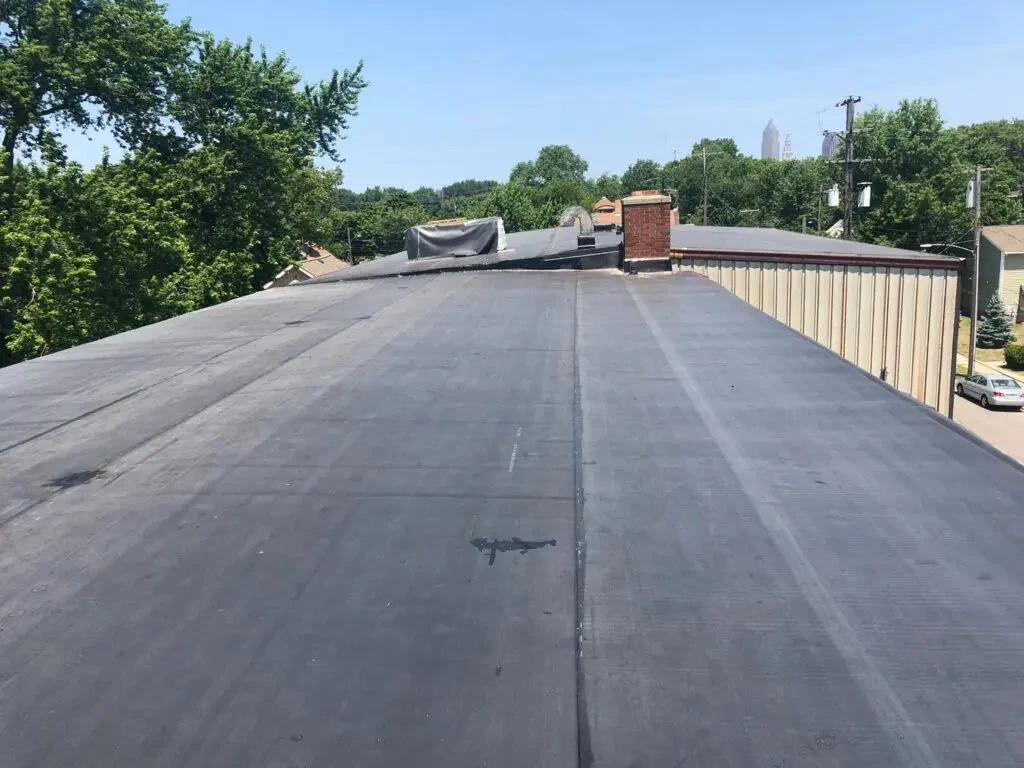
Modified bitumen still wins bids on Asheville buildings with genuinely complicated rooflines, older institutional buildings expanded in phases over decades, downtown blocks with additions bolted onto the original structure, mixed low-slope and steeper sections meeting at odd angles. A multi-ply system handles that kind of transition more forgivingly than a single sheet of membrane trying to weld a clean seam across an awkward slope change.
Material and labor cost run competitive with single-ply systems on a like-for-like basis, and the installation method is well understood by regional crews who have been putting modified bitumen on Asheville roofs for a long time. That familiarity matters on a bid comparison, since an unfamiliar system in unfamiliar hands is its own risk, regardless of what the spec sheet says.
SBS vs APP, and Why SBS Is the Cold-Weather Choice at Elevation
SBS modified bitumen is rubberized, which gives it flexibility across a wide temperature range, while APP modified bitumen is plastic-modified and generally performs better heat-welded in consistently warm climates. Asheville's elevation brings real cold snaps into the mix, and the north-facing sections of many institutional buildings here stay shaded and cold longer through the winter than the rest of the roof, which is exactly where SBS's flexibility earns its keep.
SBS is typically installed with a torch, a cold adhesive, or as a self-adhered sheet, and the choice between those methods is as much a building-occupancy question as a material question, which the next section covers directly.
Torch-Applied vs Cold-Adhesive in Occupied Downtown Buildings
Torch application is the traditional method and it works well, but it requires a hot work permit and an active fire watch on an occupied building, which matters on a downtown block with retail tenants below or a hospital annex that cannot tolerate an open-flame risk anywhere near occupied space. Cold-adhesive application removes the open flame from the equation entirely, at some tradeoff in installed cost and schedule.
A modified bitumen SBS submittal for an Asheville institutional or downtown bid should include the following before a procurement team compares contractors:
- Application method specified: torch-applied, cold-adhesive, or self-adhered
- Hot work permit and fire watch plan if torch application is proposed on an occupied building
- Number of plies and the lap detail for base sheet and cap sheet
- Granule surfacing specification and its UV exposure rating
- Flashing detail drawings for slope transitions and roof-plane intersections
Multi-Ply Redundancy on Complex Mountain Rooflines
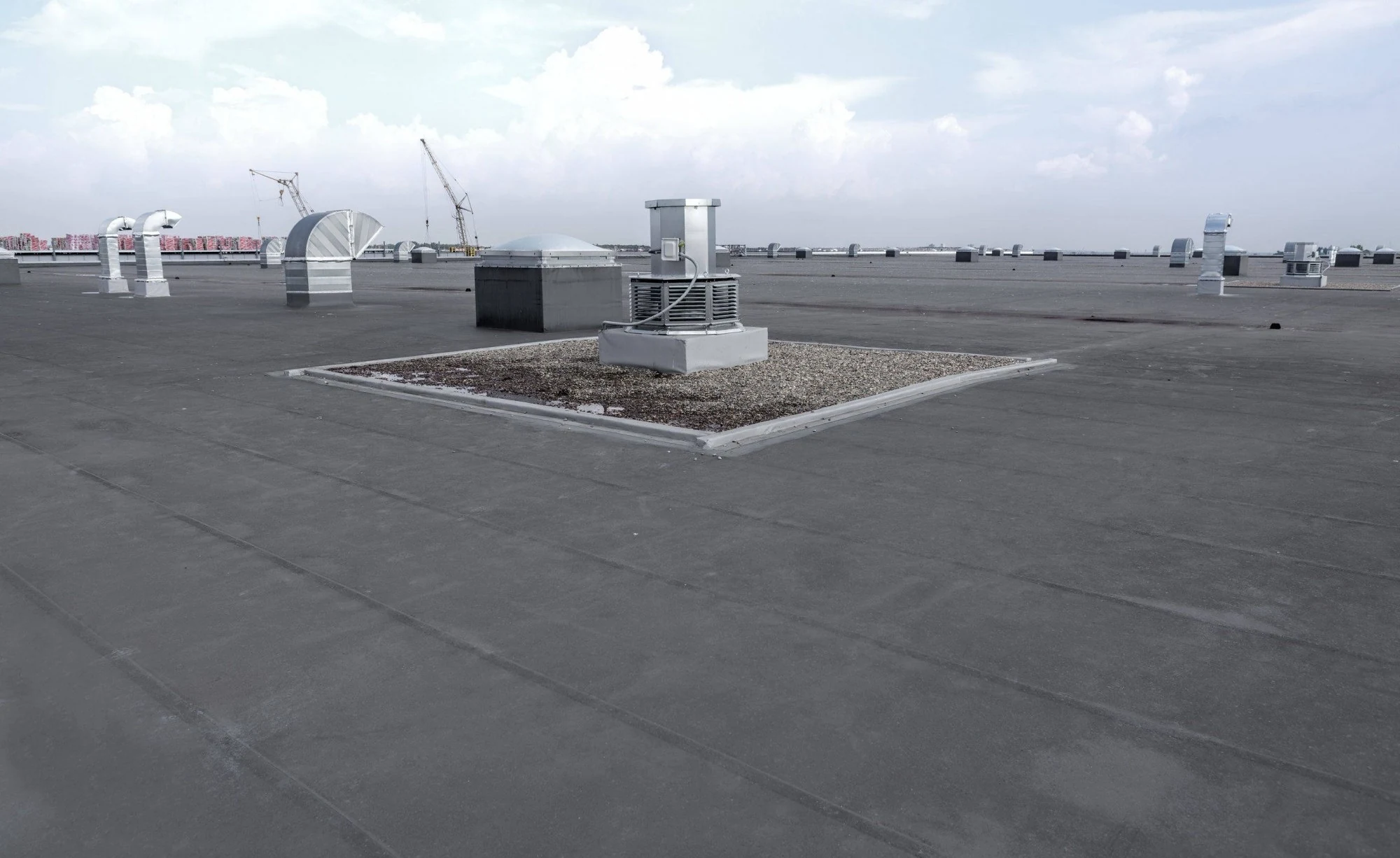
A layered base sheet and cap sheet assembly gives a modified bitumen roof a built-in redundancy that a single membrane sheet does not have, which is genuinely useful on a roofline with several planes meeting at different slopes and several generations of flashing repairs already layered into the details. Where a single-ply seam has to be welded cleanly across an awkward transition, a modified bitumen ply can be lapped and detailed with more forgiveness.
That redundancy comes at a labor cost, more plies mean more installation time, and it is worth weighing directly against a single-ply alternative in the bid tab rather than assuming multi-ply always wins on a complicated roof. On a genuinely simple, single-plane roof, the redundancy is not buying much, and a single-ply system usually wins that comparison instead.
Granule Surfacing and UV Exposure at 2,200 Feet
Elevation increases UV intensity even when the air temperature is cooler than it would be at sea level, and Asheville's roofs sit high enough that this matters for any surfacing exposed to direct sun. Granule-surfaced cap sheet carries its own UV protection built into the surfacing rather than relying on a separate coating, which is one reason it holds up reasonably well here without added maintenance steps.
Granule loss over time is the thing to watch, thin or bare patches on a cap sheet are an early warning sign worth catching before the underlying ply is exposed. We fold that inspection into the preventive care schedule we cover on our preventive maintenance programs page rather than leaving it to be noticed only after a leak shows up inside the building.
What Owners Ask About Modified Bitumen SBS
Is modified bitumen still a reasonable choice compared to single-ply membrane?
Yes, particularly on rooflines with multiple planes and slope transitions where a multi-ply system details more forgivingly than a single welded sheet. On a simple, flat, single-plane roof, single-ply usually wins the cost comparison instead.
Should we require cold-adhesive instead of torch-applied on an occupied building?
On a building with retail tenants below or medical space that cannot tolerate open-flame risk nearby, we generally recommend cold-adhesive or self-adhered application and building the hot work restriction directly into the bid documents.
How does elevation affect UV exposure on a granule-surfaced cap sheet?
UV intensity is higher at Asheville's elevation than it would be at sea level for the same air temperature, which makes granule surfacing and its condition over time worth checking as part of routine roof maintenance, not only after a visible leak appears.
Is SBS or APP the better choice for our climate?
SBS, for most Asheville applications. Its rubberized flexibility handles our winter cold snaps and the wide seasonal temperature swing better than APP's more rigid, plastic-modified formulation.
How many plies should a modified bitumen roof carry?
A base sheet and a cap sheet is the standard two-ply assembly for most commercial applications here. Additional plies add redundancy and cost together, and we specify them based on the roofline's complexity, not as a default upgrade.
Related
Ready to review the roof scope?
Request a Roof Assessment