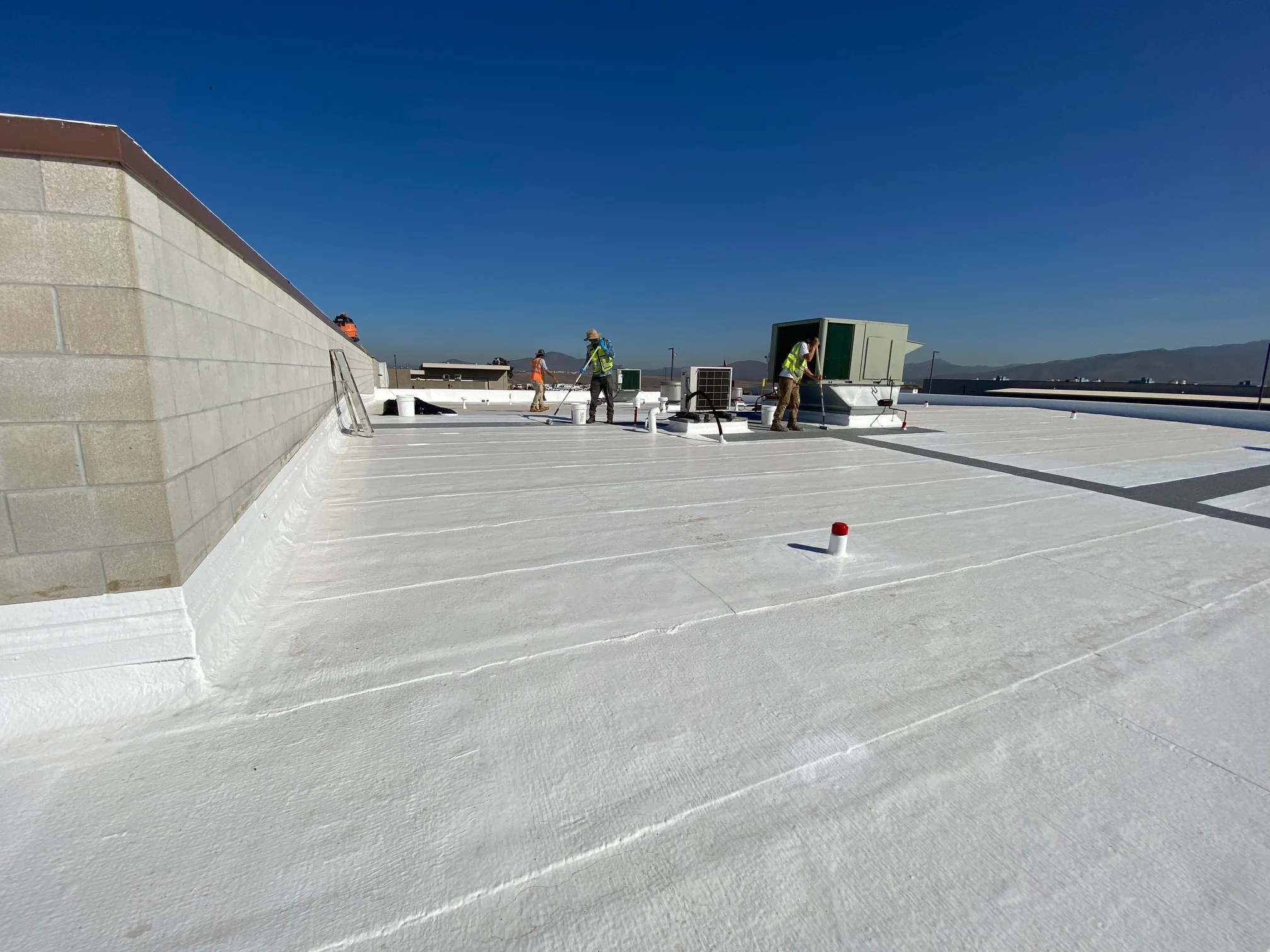
Roof Systems
TPO 60-Mil Roof Systems in Asheville, NC
TPO 60-mil roof systems for Asheville institutional and municipal reroofs, covering submittal requirements, wind uplift design, and cold-weather install windows.
TPO 60-Mil as the Base Bid on Asheville Institutional Reroofs
TPO 60-mil is the membrane that shows up as the base bid on most Asheville institutional reroof packages we review, from county annex buildings off Coxe Avenue to mid-rise office stock along Biltmore Avenue. It reads clean on a bid tab. Whether it performs depends on how specific the submittal behind that line item actually is.
Writing the Spec So Low Bid Doesn't Mean Thin Bid
A base bid that just says TPO membrane roofing invites substitution. We have seen bid packages get value-engineered down to a thinner reinforced scrim or a fastening pattern that meets code minimum but not the wind zone the building actually sits in. Naming the membrane thickness, the reinforcement scrim weight, and the attachment method in the spec section closes that gap before bids come in, not after award.
Deck type matters as much as membrane thickness. A steel deck downtown office and a poured concrete deck at a county facility take fasteners differently, and the submittal should show which deck condition the fastening pattern was engineered against. A generic manufacturer detail sheet with no deck-specific notes is not a complete submittal, it is a .
Wind Uplift Numbers Since Helene
Helene hit the Asheville area primarily as a rain and flood event, not a coastal wind event, but it moved more than one facilities director to look again at wind design pressures on buildings they had assumed were sheltered by elevation and tree cover. Exposed sites, a commercial pad near the airport in Fletcher, a building along an open ridge corridor, carry higher uplift pressures than a block tucked between downtown storefronts, and the fastening pattern has to reflect that difference.
The submittal should include a site-specific ASCE 7 wind uplift calculation broken into field, perimeter, and corner zones, with a fastening pattern drawing that matches those numbers. A boilerplate uplift table copied from a manufacturer's general literature, with no building-specific inputs, does not tell a procurement team anything about the actual roof going up.
Cold-Weather Install Windows at 2,200 Feet
Asheville's elevation puts overnight lows in the shoulder seasons low enough to drop hot-air welding below a membrane manufacturer's minimum application temperature, even on days where the afternoon forecast looks workable. A school or hospital annex reroof scheduled into October or November needs a cold-start plan in the submittal, not only a completion date on the schedule of values.
A complete 60-mil TPO submittal package for an Asheville institutional bid typically includes the items below, and a bid package missing more than one or two of these should raise a question before award, not after the roof is dried in:
- Manufacturer product data sheet naming membrane thickness and scrim reinforcement
- Site-specific wind uplift calculation broken into field, perimeter, and corner zones
- Fastening pattern drawing matched to the actual deck type
- Flashing detail drawings for parapets, curbs, and roof penetrations
- Cold-weather application plan covering minimum substrate and ambient temperature
- Warranty term length and NDL coverage language
- Manufacturer field inspection requirement ahead of warranty issuance
Mechanically Attached vs Fully Adhered on Older Downtown Decks
Mechanically attached is the standard attachment method for a sound steel or concrete deck, and it is the more economical path when the wind calculation allows it. Some of Asheville's older downtown commercial buildings carry wood plank or gypsum decks that were never meant to hold a modern fastening pattern, and forcing mechanical attachment onto a deck like that just trades one problem for another.
Fully adhered attachment bonds the membrane to a cover board instead of fastening through the deck, and it becomes the right call when the deck won't reliably hold fasteners or when the wind calculation pushes the uplift requirement past what a mechanically attached system can carry. The decision belongs in the submittal, tied to the actual deck condition report, not left to the installing crew's judgment on install day.
When the Alternate Line Should Move to 80-Mil
A building with heavy rooftop equipment traffic, a hospital annex with frequent mechanical service, a university building with a dense rooftop unit layout, is a candidate for an 80-mil bid alternate rather than the 60-mil base bid. We cover that comparison directly on our TPO 80-mil roof systems page.
A bid tab that carries both the 60-mil base bid and an 80-mil alternate, priced separately, gives an owner the actual cost of the upgrade instead of a contractor's verbal estimate. That is the kind of clarity a procurement team can defend in a bid comparison meeting.
What Procurement Teams Ask Before Approving a TPO 60-Mil Bid
Is 60-mil TPO acceptable for a building with heavy rooftop equipment traffic?
It can be, but we generally recommend pricing an 80-mil alternate alongside the 60-mil base bid on any building with frequent mechanical service traffic, so the owner can compare the added top-ply wear resistance against the cost difference directly.
What wind uplift documentation should we require from the low bidder?
A site-specific ASCE 7 calculation broken into field, perimeter, and corner zones, with a fastening pattern drawing that matches those zones. A generic manufacturer table with no building-specific inputs is not sufficient documentation for a bid award.
Can 60-mil TPO be installed year-round at Asheville's elevation?
Most of the year, yes, but late fall and early spring installs need a cold-weather plan because overnight lows can drop below the membrane's minimum welding temperature even when the daytime forecast looks fine. That plan should be part of the submittal, not an assumption.
Does 60-mil TPO carry the same warranty term as 80-mil?
Manufacturers generally offer comparable warranty term options on both thicknesses when the installation meets their detail requirements. The practical difference is top-ply wear resistance under foot and equipment traffic, which is a service-life question more than a warranty-term question.
How does an older building's deck condition change the attachment method?
A deck that won't reliably hold fasteners, a wood plank deck or a deteriorated gypsum deck common in some of Asheville's older downtown buildings, generally pushes the design toward fully adhered attachment over a cover board rather than mechanical fastening through a questionable deck.
Related
Ready to review the roof scope?
Request a Roof Assessment