Roof Systems
Black EPDM Roof Systems in Asheville, NC
Black EPDM roof systems for Asheville's older downtown buildings, covering attachment methods, seam integrity, and where EPDM beats a single-ply bid alternate.
Black EPDM on Asheville's Older Downtown Commercial Stock
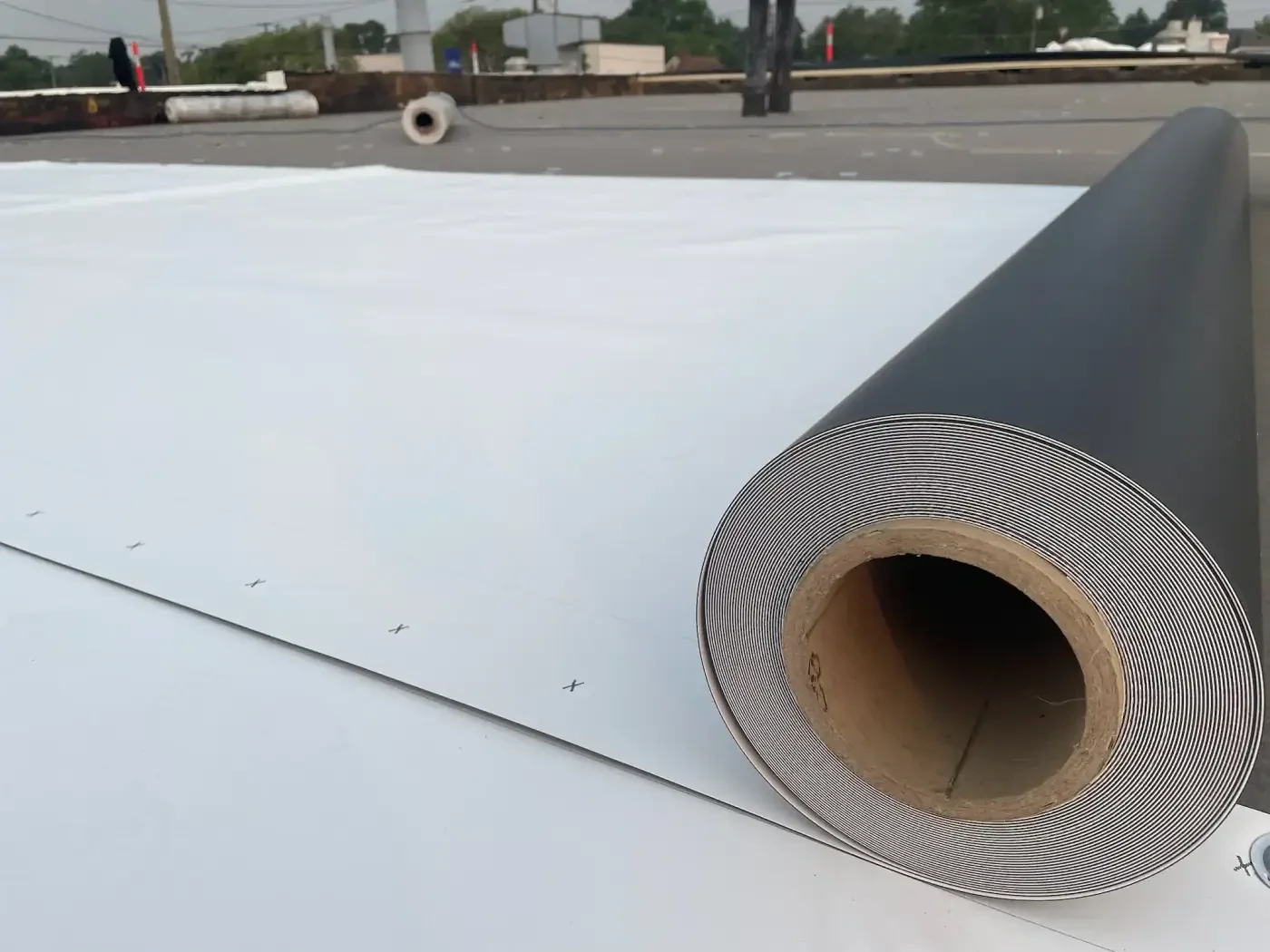
Black EPDM still shows up as a legitimate bid alternate on Asheville's older commercial buildings, the masonry-and-steel stock around Pack Square and the Grove Arcade district, where a flexible membrane and a simpler detail package can outperform a more expensive single-ply system on a complicated roof.
Where EPDM Still Wins a Bid Downtown
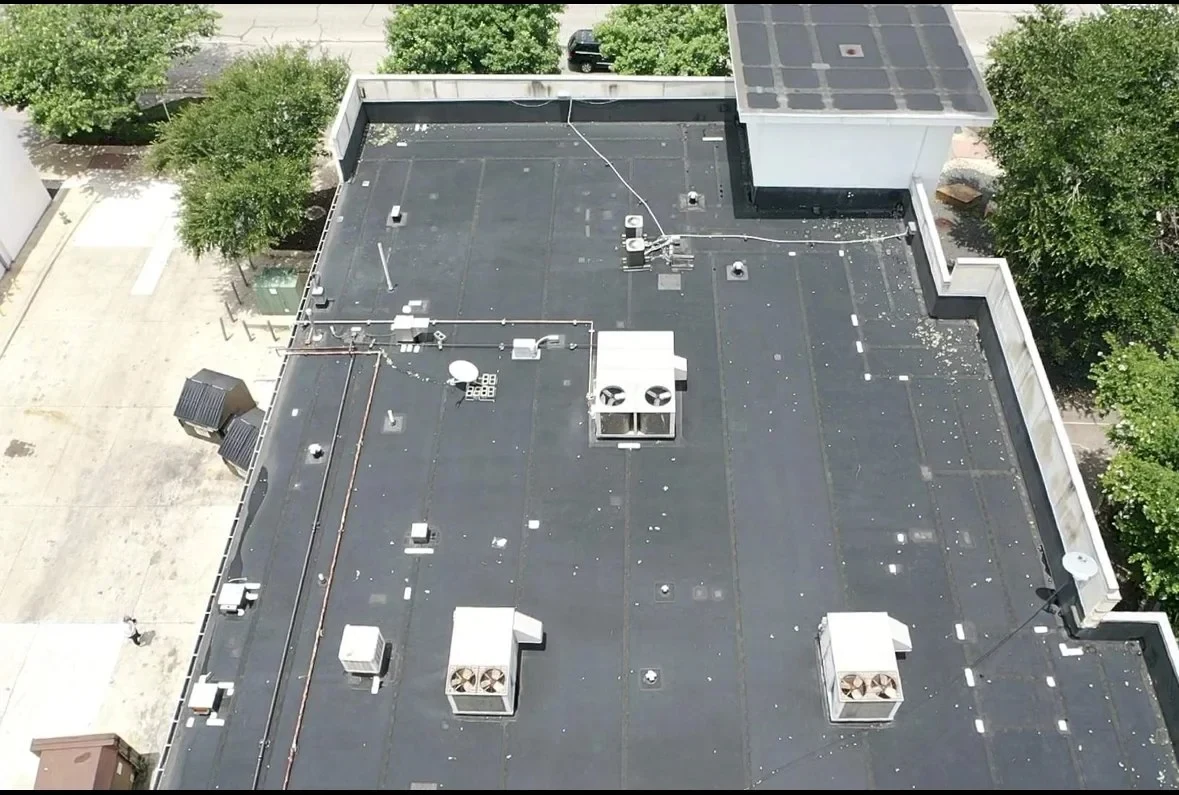
Older commercial buildings around Pack Square and the Grove Arcade district rarely have a simple rectangular roof. Chimneys from converted residential-turned-commercial buildings, added parapet sections, and decades of ad hoc penetrations make for a roofline that a field-seamed membrane handles more forgivingly than a hot-air welded system that wants clean, accessible seam runs.
EPDM's lower material cost per square foot makes it a reasonable base bid on a budget-driven reroof, but it deserves the same submittal discipline as any other membrane. A thin, non-reinforced sheet priced to win on cost alone is not the same product as a properly specified reinforced EPDM system, and a bid tab should make that distinction explicit.
Ballasted, Mechanically Attached, or Fully Adhered on a Deck Nobody Has Opened Up Yet
Ballasted EPDM, membrane held down with a layer of stone ballast instead of fasteners or adhesive, avoids penetrating a deck that nobody wants to test with a fastener pull. It also adds real dead load, and on an older downtown building we do not recommend it without a structural engineer confirming the roof framing can carry the additional weight.
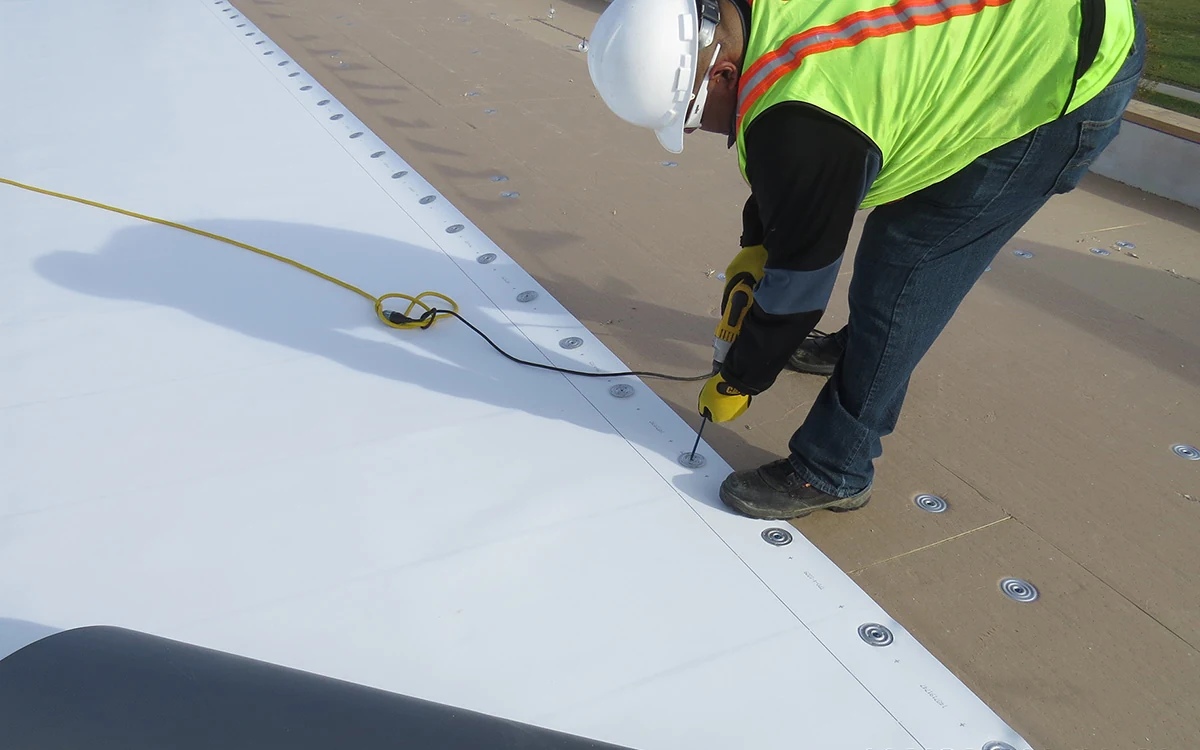
Mechanically attached EPDM uses batten bars or plates through the membrane into the deck, and it is the more common choice where the deck condition is documented and sound. Fully adhered bonds the membrane to a cover board and is the better call on a deck that would not reliably hold fasteners, similar to the logic that governs single-ply attachment generally.
Freeze-Thaw Flexibility Is EPDM's Real Advantage
Asheville's temperature swing between a January cold snap and a July afternoon is wide for a mountain city, and an older roof deck that has already moved over decades keeps moving. EPDM's elastomeric flexibility handles that expansion and contraction more forgivingly than a rigid membrane on a deck with existing movement, which is part of why it still earns a place on some of Asheville's oldest commercial roofs.
A black EPDM submittal for a downtown Asheville reroof should include the following before it goes into a bid comparison:
- Membrane thickness and reinforcement specification, reinforced versus non-reinforced
- Attachment method matched to a documented deck condition survey
- Seam tape or splice adhesive detail, since field seams are EPDM's most common failure point
- Flashing detail drawings for parapets, chimneys, and irregular penetrations
- Ballast weight calculation and structural engineer sign-off, if ballasted attachment is under consideration
Seam Integrity Is Where EPDM Reroofs Actually Fail
EPDM field seams are taped or spliced, not hot-air welded, which makes seam quality control a matter of installer discipline rather than machine consistency. On a downtown roof with dozens of penetrations from decades of tenant changes, seam count goes up fast, and each one is a place the detail can fail if it was not primed and rolled correctly.
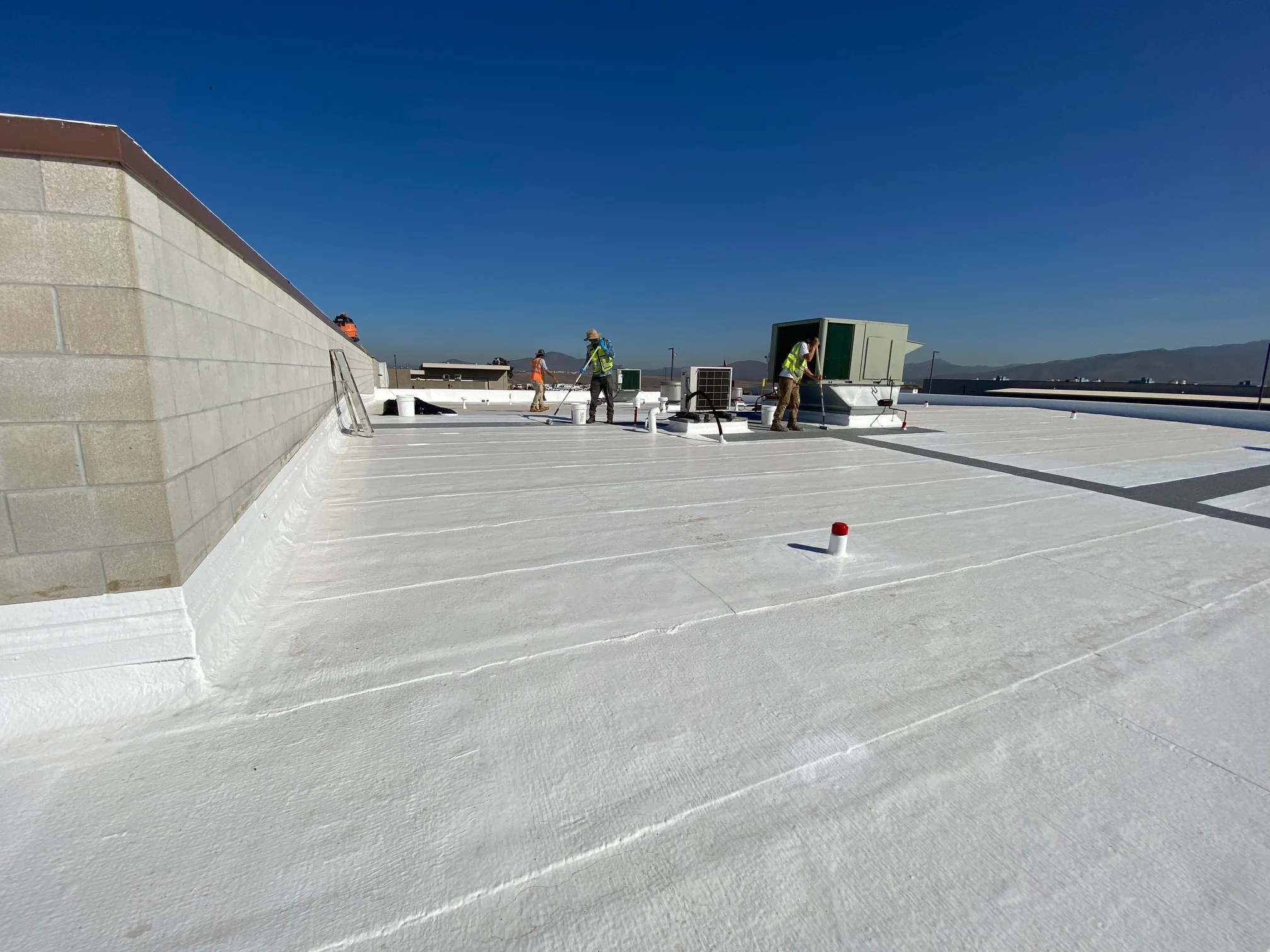
We document seam inspection as part of closeout, and we favor liquid-applied flashing over cut-and-patch tape details at complicated penetrations, curbs with odd geometry, chimney bases, old vent stacks, because a liquid detail conforms to an irregular shape better than a pre-cut patch ever will.
Where EPDM Loses to TPO in a Bid Comparison
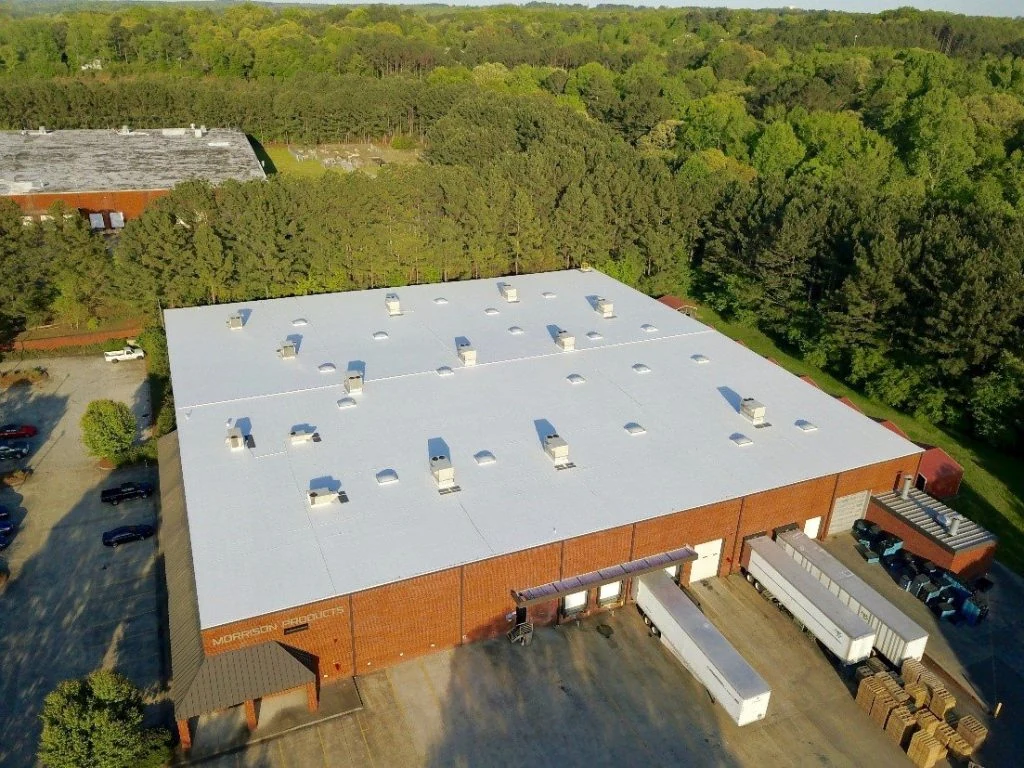
Black EPDM absorbs more solar heat than a white membrane, which matters less on a shaded downtown block and more on an exposed roof at a hotel or hospitality building trying to manage cooling costs. An owner weighing reflectivity should look at our white EPDM roof systems page or the TPO options we cover separately.
The honest comparison is not black EPDM against every other membrane everywhere, it is black EPDM against TPO on the specific roof in question, weighed by deck condition, roofline complexity, and budget. On a straightforward, exposed, single-story roof, TPO usually wins that comparison. On a complicated, budget-constrained downtown reroof, EPDM still earns its place.
What Building Owners Ask About Black EPDM Reroofs
How long does a properly installed EPDM roof typically hold up in this climate?
Service life depends heavily on seam quality, deck condition, and maintenance, more than on the membrane itself. A well-detailed EPDM roof with documented seams and routine drain maintenance holds up for decades; a poorly seamed one shows problems within a few years regardless of membrane quality.
Is ballasted EPDM ever appropriate for an older downtown building?
Only after a structural engineer confirms the roof framing can carry the added ballast weight. We do not recommend ballasted attachment on an older deck without that verification, since the failure mode there is structural, not a roofing question.
How often should EPDM seams be inspected?
We recommend a seam and flashing inspection at least annually, and after any major storm. Seam failures are usually gradual, a lifted edge or a soft spot in an old splice, and catching them early is far cheaper than a full membrane replacement.
Is black EPDM actually cheaper than TPO installed?
Material cost per square foot generally runs lower, but the total installed cost comparison depends on roofline complexity and deck condition. A simple roof with a sound deck may favor TPO once labor and detailing are counted; a complicated roofline can favor EPDM.
Should we specify white EPDM instead for cooling costs?
If the roof is exposed and cooling cost is a real concern, particularly at a hotel or hospitality building, we typically recommend comparing white EPDM or TPO directly against black EPDM in the bid rather than defaulting to black.
Related
Ready to review the roof scope?
Request a Roof Assessment