Commercial Roofing Services
Metal R-Panel Roofing in Asheville, NC
Exposed-fastener R-panel metal roofing for warehouse and flex-space buildings in Candler, Fletcher, and along US-19/23, priced against standing seam alternates.
R-Panel Metal Roofing for Warehouses and Flex Space Along US-19/23
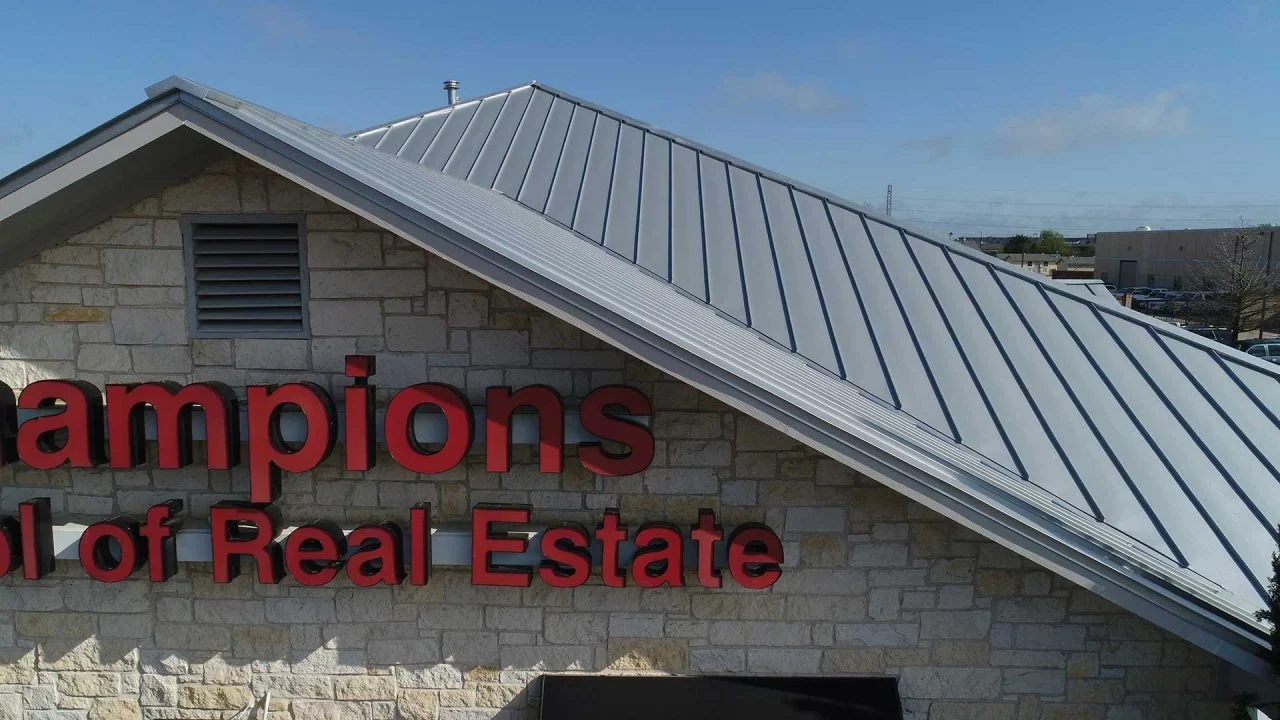
Exposed-fastener R-panel is the roof we bid most on warehouse, flex-space, and light-industrial buildings in the Enka district, Fletcher's industrial parks, and along US-19/23 through Candler. It's the lower-cost metal option compared to standing seam, and for a building where the roof isn't a visible design element, that cost difference is usually the deciding factor for ownership.
Where R-Panel Fits in This Market
Self-storage facilities, distribution buildings, and the pole-barn-adjacent agricultural and light-commercial buildings around Leicester and Fairview almost all use exposed-fastener R-panel rather than standing seam, because the roof sits above unoccupied or minimally finished space and the building owner doesn't need the higher-cost concealed-fastener system to protect a design investment. We see the same pattern on flex-space buildings in Fletcher's industrial parks, where multiple small tenants lease bays under one roof and the owner is pricing the reroof against a fairly tight capital budget.
Purlin Spacing and Retrofit Over Existing Metal
A lot of our R-panel bids are retrofit work - installing new panels over an existing metal roof rather than a full tear-off - and the limiting factor is almost always purlin spacing and condition. We check existing purlin spacing against the new panel's span rating before pricing a retrofit, because a panel rated for 5-foot spacing installed over purlins set at 6 feet is a warranty and structural problem waiting to surface, not a shortcut that saves the owner money.
Fastener Selection and Long-Term Weathertightness
Exposed fasteners are the tradeoff that makes R-panel less expensive than standing seam, and they're also the first thing to fail if the wrong fastener or washer is used. Our standard practice on R-panel installs:
- Long-life fasteners with EPDM-bonded washers rated for the panel's expected service life, not the cheapest fastener that fits the hole pattern
- Fastener spacing matched to the manufacturer's wind-load engineering for our exposure category
- Closure strips at ridge and eave to block wind-driven rain and pest intrusion
- Sealant tape at side-laps in addition to fasteners, not as a substitute for correct fastener spacing
Freeze-Thaw, Condensation, and Uninsulated Buildings
A lot of warehouse and flex-space buildings in this market are uninsulated or minimally insulated on the roof deck, which means condensation on the underside of the panel is as common a moisture problem as anything coming from outside. We check for condensation staining and existing vapor barrier condition during inspection, because a leak an owner reports after a freeze-thaw cycle is sometimes condensation dripping off the panel underside, not a failed fastener at all - and those two problems get fixed differently.
Self-storage buildings are a particular case worth calling out, since a tenant's stored goods sitting under a condensation drip for weeks before anyone notices is a different liability conversation than a roof leak reported the same day it starts. On self-storage roofs specifically, we sometimes recommend a vapor retarder retrofit even where the fasteners and panels themselves are in good condition, because the cost of correcting a chronic condensation problem is usually smaller than the cost of one damaged-goods claim from a tenant.
We also see the same condensation pattern on cold-storage adjacent buildings and equipment yards around Fletcher and Arden, where a heated or partially conditioned interior meets an uninsulated metal roof deck and the temperature differential does the rest. The fix there is usually a vapor barrier retrofit paired with targeted insulation rather than a full roof replacement, and we price it as its own line item so an owner isn't paying for a new roof to solve a condensation problem the new roof wouldn't actually fix on its own.
Pricing R-Panel Against Standing Seam for Industrial Owners
On most warehouse and flex-space bids, we price R-panel as the base bid and standing seam as an alternate, so an owner comparing installed cost against expected fastener maintenance over the system's life has both numbers in front of them at once. For buildings with heavy rooftop equipment or a longer intended hold period, the standing seam alternate sometimes pencils out even at a higher upfront cost, and we say so directly in the bid narrative.
Questions from Warehouse and Flex-Space Owners
Can you install new R-panel over our existing metal roof without a tear-off?
Often yes, provided the existing purlin spacing and structure support the new panel's span rating. We verify this before pricing the retrofit.
How often do exposed fasteners need to be checked or replaced?
It depends on fastener quality and washer condition, which is why we spec long-life fasteners up front. We can also set up a periodic inspection program rather than waiting for a leak to surface.
Is condensation under the panel something you can fix without replacing the roof?
Usually, with a vapor barrier or insulation retrofit addressing the condensation source rather than treating it as a leak in the roofing itself.
What's the price difference between R-panel and standing seam on a typical warehouse?
It varies by roof size and panel gauge, but we price both as base bid and alternate so ownership sees the actual difference for their specific building.
Do you handle multi-tenant flex-space roofs with different lease lines under one roof?
Yes, we coordinate with property management on tenant notification and access scheduling since the roof is one continuous system regardless of lease boundaries below.
Related
Ready to review the roof scope?
Request a Roof Assessment