Roof Systems
PVC Roof Systems in Asheville, NC
PVC roof systems for Asheville breweries, restaurants, and hospital exhaust decks, covering chemical resistance, weld seam integrity, and post-Helene recover scope.
PVC Membrane for Brewery, Restaurant, and Hospital Exhaust Roofs in Asheville
PVC membrane earns its premium over TPO on a specific class of Asheville roof, brewery production buildings, restaurant kitchens, and hospital exhaust decks, where grease, oils, and chemical exposure will degrade a lesser membrane faster than the budget line item suggests.
Grease and Solvent Exposure on Brewery and Restaurant Roofs
New Belgium's River Arts District brewery and Sierra Nevada's Mills River production facility both vent grain dust, cleaning chemicals, and process exhaust across sections of roof that a typical office building never sees. Restaurant kitchens along Wall Street and Biltmore Avenue downtown put similar grease-laden exhaust air across a smaller footprint, but the exposure is just as real for the membrane sitting under the hood vent.
TPO holds up well against UV and general weathering, but sustained grease and oil exposure degrades it faster than the base material cost suggests. PVC's chemical formulation resists that kind of exposure specifically, which is why it shows up as the specified membrane near kitchen exhaust fans, grease interceptors, and brewery process venting rather than as a blanket recommendation for every roof.
PVC's Chemical Resistance Near Hospital and Lab Exhaust
Mission Hospital's campus and the smaller medical office buildings scattered through Asheville vent lab and chemical exhaust over portions of their roofs, and PVC has a long history in healthcare roofing for exactly that reason. The membrane's resistance to chemical exposure matters more in that application than its cost premium over TPO.
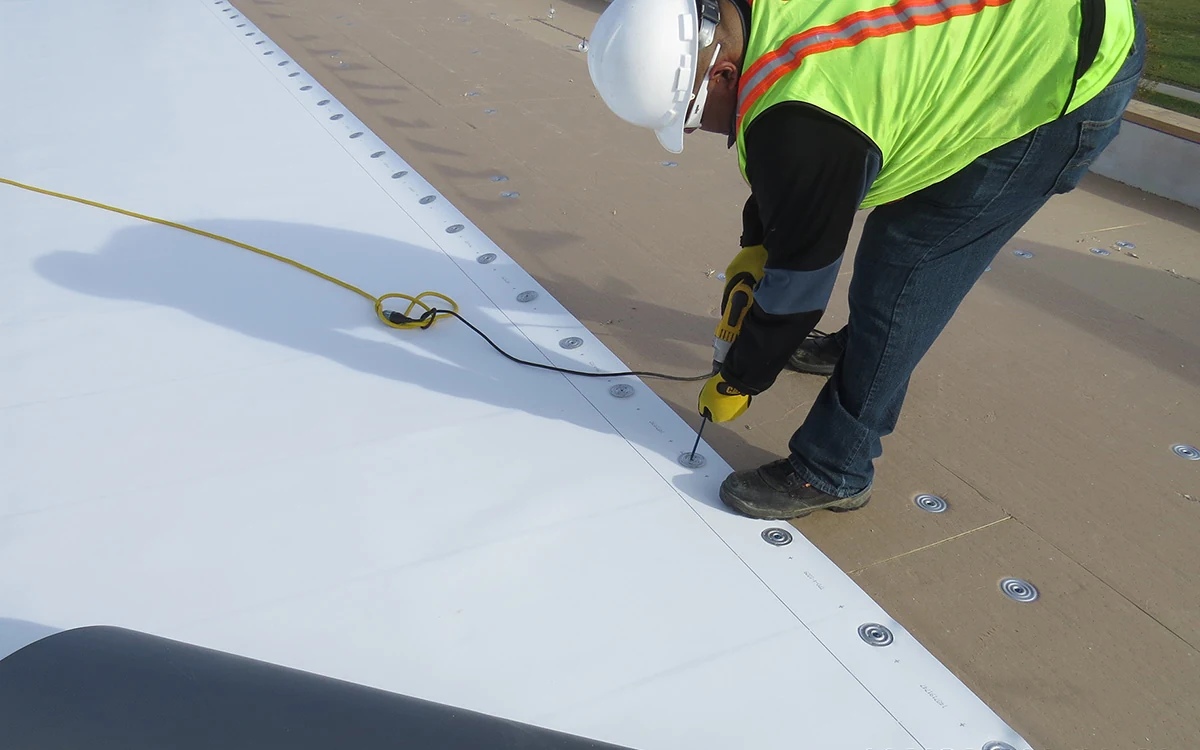
PVC welds with the same hot-air principle as TPO but at different heat and speed settings specific to the material, which is a real installer-skill distinction worth naming in a bid conversation. A crew experienced primarily with TPO welding does not automatically weld PVC correctly on the first pass, and that is a fair question to ask a bidder directly.
Hot-Air Welding and Seam Integrity in a Wet Climate
Asheville's rainfall and the fog that regularly sits in the French Broad and Swannanoa valleys put a welded seam through real moisture exposure over the life of the roof. A properly welded PVC seam performs well under that exposure, but weld quality is a probe-and-verify question, not a visual one, a seam can look clean and still fail a probe test if the weld temperature or overlap was off.
A PVC roof submittal for a grease- or chemical-exposure building in Asheville should include the items below before it goes into a bid comparison:
- Membrane thickness and PVC formulation data confirming the chemical and grease resistance rating
- Manufacturer-published detail drawings for grease trap curbs and kitchen exhaust penetrations
- A weld seam probe-testing protocol as part of the quality control plan
- Flashing details for rooftop exhaust fans, curbs, and ductwork specific to kitchen or lab use
- Cover board specification matched to the deck condition and traffic pattern
Recovering River Arts District Roofs After Helene
Helene's flooding hit the River Arts District along the French Broad River hard, and several buildings there took on water at grade well above what anyone had planned for. For owners now working through the broader rebuild, the roof-level question is whether the membrane and insulation above the flood line also need attention as part of the same scope, or whether the roof itself came through undamaged while the ground floor did not.
We evaluate that separately from the ground-floor rebuild, walking the roof, checking insulation for moisture that may have migrated up through wall cavities, and documenting conditions plainly for the owner's records. We stay in the contractor lane on that documentation, describing what we observe without promising an insurance outcome, since that determination belongs to the carrier and the adjuster, not to us.
Cost Premium vs TPO, and When It's Worth Specifying
PVC generally costs more per square foot installed than TPO from a comparable manufacturer, and that premium is worth paying specifically where chemical or grease exposure calls for it, not as a default specification across every building type. A standard office or retail roof with no exhaust exposure is usually better served by the TPO systems we cover on our TPO 60-mil roof systems page.
The right question for a procurement team is not which membrane costs less on the bid tab, it is which membrane matches the actual exposure the roof will see over its service life. A kitchen exhaust curb or a brewery process vent is worth the PVC premium. A shaded office roof with no chemical exposure usually is not.
What Owners Ask About PVC on Exposure-Heavy Roofs
Is PVC required for every restaurant or brewery roof in Asheville?
No. It is the right call specifically around grease interceptors, kitchen exhaust curbs, and brewery process venting where chemical exposure is real. Sections of the same roof away from that exposure can often use a less expensive membrane.
How does PVC handle Asheville's heavy rainfall compared to TPO?
Both membranes shed water well when properly detailed. The difference that matters here is chemical resistance near exhaust and grease sources, not general rainfall performance, where the two systems are comparable.
Did Helene flooding affect River Arts District roofs, and does that change the reroof scope?
The flooding was primarily a ground-level and lower-floor event for most buildings, but we check roof-level insulation and membrane for any moisture migration before assuming the roof came through undamaged. That check belongs in the rebuild scope, not skipped as an afterthought.
Does PVC's chemical resistance mean it needs less maintenance?
No. It resists a specific class of exposure better than TPO does, but it still needs the same drain checks, seam inspections, and flashing reviews any single-ply roof needs on a preventive maintenance schedule.
Can PVC be welded onto an existing TPO roof during a recover?
No, PVC and TPO are chemically incompatible for welding purposes. A recover project switching membrane types needs a compatible separator layer or a full tear-off, and that decision should be made before the bid goes out, not discovered on install day.
Related
Ready to review the roof scope?
Request a Roof Assessment